This course explores the question: What does it mean to live through historical rupture? We examine how historical events—such as wars and political crises—can disrupt communities and identities, creating gaps between past and present selves. Using biographical theatre as both method and medium, we focus on two forms: Playback Theatre, where stories are shared and transformed into live performances, and Documentary Theatre, which combines archival materials and personal narratives.
- Öğretmen: Olena Kalashnykova
- Öğretmen: Daria Vystavkina
The History Textbook Workshop is an innovative online course designed for participants aged 14 to 25, which investigates the ways in which history textbooks reflect political, cultural, and ideological frameworks across different countries and contexts. Through interactive and collaborative sessions, students critically examine the real examples of History Textbooks from different countries and periods of contemporary history and analyze how they shape historical narratives, influence identities, and convey political messages, while developing key skills in source criticism and comparative analysis.
This course challenges the notion of textbooks as neutral sources giving access to the knowledge of the past. By comparing how the same historical events are presented in textbooks from conflicting and competing national traditions, students will discover how omissions, emphases, and interpretative frameworks reveal the political contexts in which these materials were produced. This comparative approach helps students understand not just whose history is taught, but why certain stories are told and others are silenced.
- Öğretmen: Anna Adashinskaya
This online course examines the role of universities as spaces of protection for human rights defenders (HRDs) in exile, focusing on how academic institutions can provide protection for activists. Today, authoritarianism is rising globally, and those who dare to contest authoritarian governments are often forced into exile. Traditional measures of human rights protection may not be sufficient. In this context, universities have the capacity to function as semi-safe spaces that offer resources, networks, and communities that allow HRDs to sustain their work.
- Öğretmen: Dmitry Dubrovskiy
- Öğretmen: Alexander Kalgin
- Öğretmen: Magnolia Magnolia
This course examines gender-based violence in West Asia through feminist and queer perspectives, with a particular focus on physical, sexualized, economic, and psychological violence against women, children, and queer individuals. Special attention is paid to domestic violence, femicide, so-called “honour” killings, female genital mutilation, violence in conflict settings, and violence affecting displaced and migrant populations.
- Öğretmen: Saida Sirazhudinova
- Öğretmen: Olimpiada Usanova
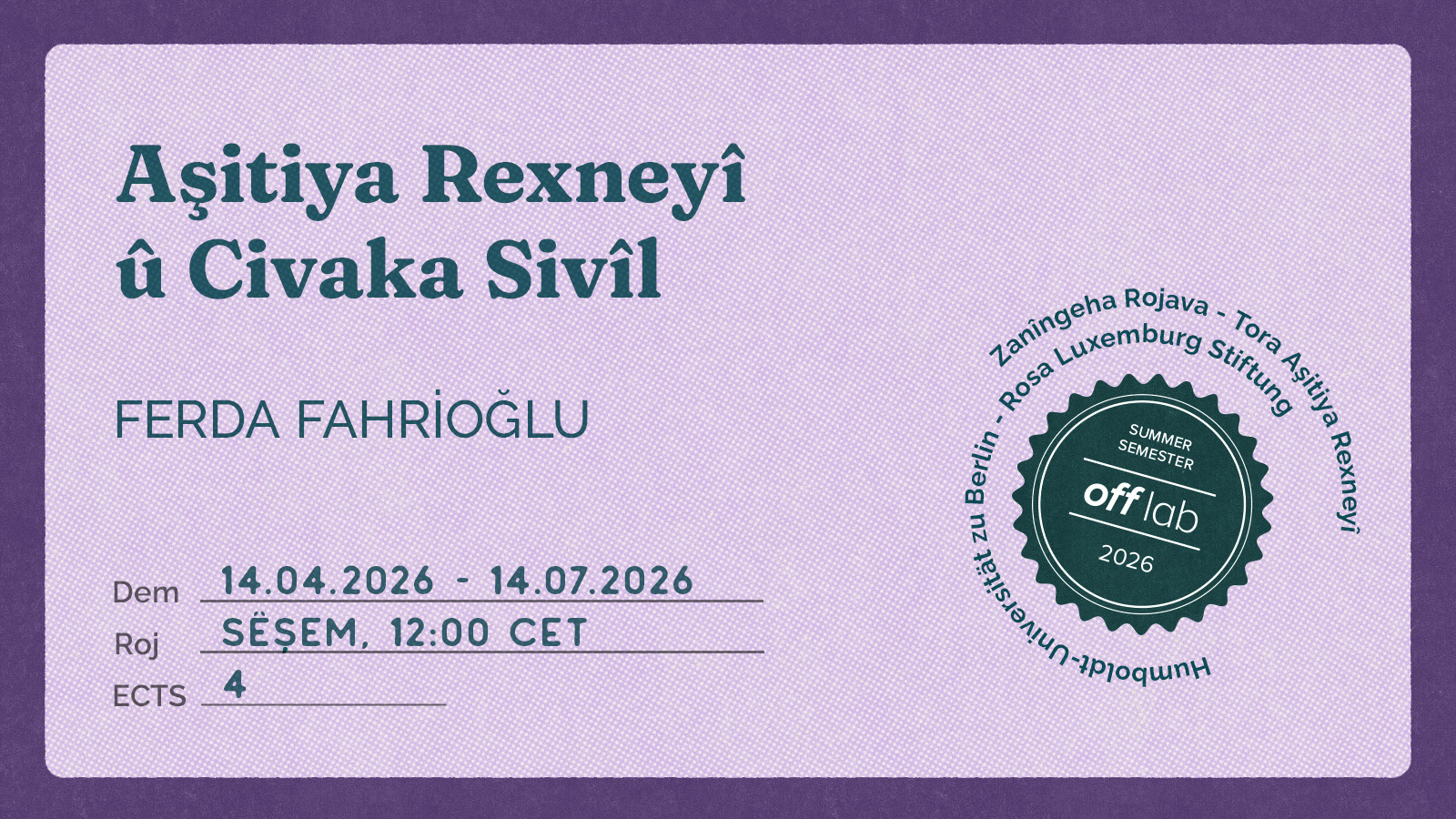
This online laboratory examines the role of civil society, as a central mid-level actor in peace-building processes, including civil society organizations (CSOs), religious and ethnic leaders, intellectuals, and professional associations, and their capacity to bridge decision-makers and conflict-affected communities.
- Öğretmen: Ferda Fahrioğlu